
Warrington Township Previous Resident Sources by Era
A backward address inquiry needs an evidence ladder because ownership, tax responsibility, and household presence are different facts. Start with the current County property card and its deed reference, then use the Recorder chain for prior transfers. For earlier periods, Mercer’s historical Recorder indexes and the State Archives tax-list runs offer dated local leads. Permit and plan files may add a property chronology when a precise Township request identifies an existing file. No verified Warrington city or criss-cross directory run should be inserted into the trail without a catalog or shelf confirmation.
| Evidence source | Verified time coverage | Custodian or route | What it can establish |
|---|---|---|---|
| Recorder documents through LANDEX | 1684-present | Bucks County Recorder or LANDEX | Recorded transfers, mortgages, plans, and prior-instrument references |
| Recorder grantor/grantee indexes | 1684-1919 | Mercer Research Library, Bucks County Archives | Older party-index route for transfer research |
| County historical deed-book groupings | 1684-1919 through 1999-present groupings | Recorder public research room | Navigation to older recorded books |
| Warrington Township tax-list microfilm | 1783-1807; 1808-undated; 1846-1852; 1852-1858 | Pennsylvania State Archives guide | Time-stamped taxpayer or property-holder lead |
| Township permit or plan file | Published date range not located | Warrington Building Office or Right-to-Know route | Known-address project or inspection context if releasable |
| Local city or criss-cross directory | Not verified | Potential Mercer or Bucks County Free Library route | Requires publisher, year, call number, and actual entry verification |
The online path is not the only path. LANDEX is the Recorder’s fee-based document route, while the Recorder’s public research room has historical books and index tools. Mercer’s special indexes are onsite. A precise request or visit is often needed after the first recorded deed or property card identifies the time period.
Warrington Township Previous Resident Starting Record
Use the Bucks County Tax Claim Online Payment Search to locate a current tax-side property record by address, parcel, owner, mailing address, city, ZIP, municipality, or school district. Its Location Address instruction calls for the house number and street only. Add the municipality field for Warrington Twp, and use city and ZIP as separate fields when necessary. Record the parcel number, situs address, municipality, current owner line, mailing lines, assessed-value fields, and deed book/page before changing screens.
The returned card is a property and tax record, not a complete record of former occupants or all people connected to the address. The mailing line can be a post-office box, representative address, or other correspondence destination. The deed book/page is the useful bridge: it points to the recorded instrument that can identify parties, dates, a legal description, and a prior-transfer reference.
Note: Keep the exact situs address, parcel number, and deed reference together because each can be needed when an older record lacks the modern address.
Tracing Warrington Township Previous Residents Through Deeds
The Bucks Recorder explains a two-party index: the direct party is normally the grantor or mortgagor, while the indirect party is normally the grantee or mortgagee. Read the deed named on the property card through LANDEX or at the Recorder research room. The legal description and the Being Clause, also called a recital, can identify the prior seller and an earlier book/page or instrument reference. A transfer chain shows recorded ownership events. It does not automatically identify every past resident of the property.
- Search the current tax-side record by its known address and write down the parcel number, deed book/page, situs address, and municipality.
- Retrieve the referenced instrument through LANDEX or the Bucks Recorder research room and copy the parties, execution date, recording date, legal description, and Being Clause reference.
- Use the seller on that deed as a prior grantee or indirect-party search target, then locate the earlier purchase or cited prior transfer.
- Repeat the sequence, preserving the reference that connects each instrument to the next, rather than relying on a surname alone.
- Move to the Recorder’s historical books or Mercer’s onsite indexes as the date reaches material that needs counter research.
- Grantor and grantee
- The grantor transfers an interest; the grantee receives it. The Recorder’s direct and indirect index roles help separate the two sides of a transfer.
- Chain of title
- A documented sequence of recorded transfers tied together by party names and instrument references. It is ownership history, not a full household list.
- Legal description
- The deed’s land description, such as a lot, plan, tract, boundaries, or acreage. It can connect older papers when a present address is absent.
Earlier Warrington Township Previous Resident Transfers
Mercer’s Bucks County Archives offers the older transfer route for a Warrington Township address. Its Recorder deed books and grantor/grantee indexes cover 1684 through 1919, alongside estate, marriage, naturalization, coroner, and other historical record groups. The indexes are not online, so give staff a Township name, date bracket, surname variant, known parcel, tract, or subdivision clue. That level of detail directs the request to a record group without asking an archivist to assemble a broad personal profile.
A screenshot of the Bucks County Archives at Mercer shows this onsite route for Warrington Township previous residents research.
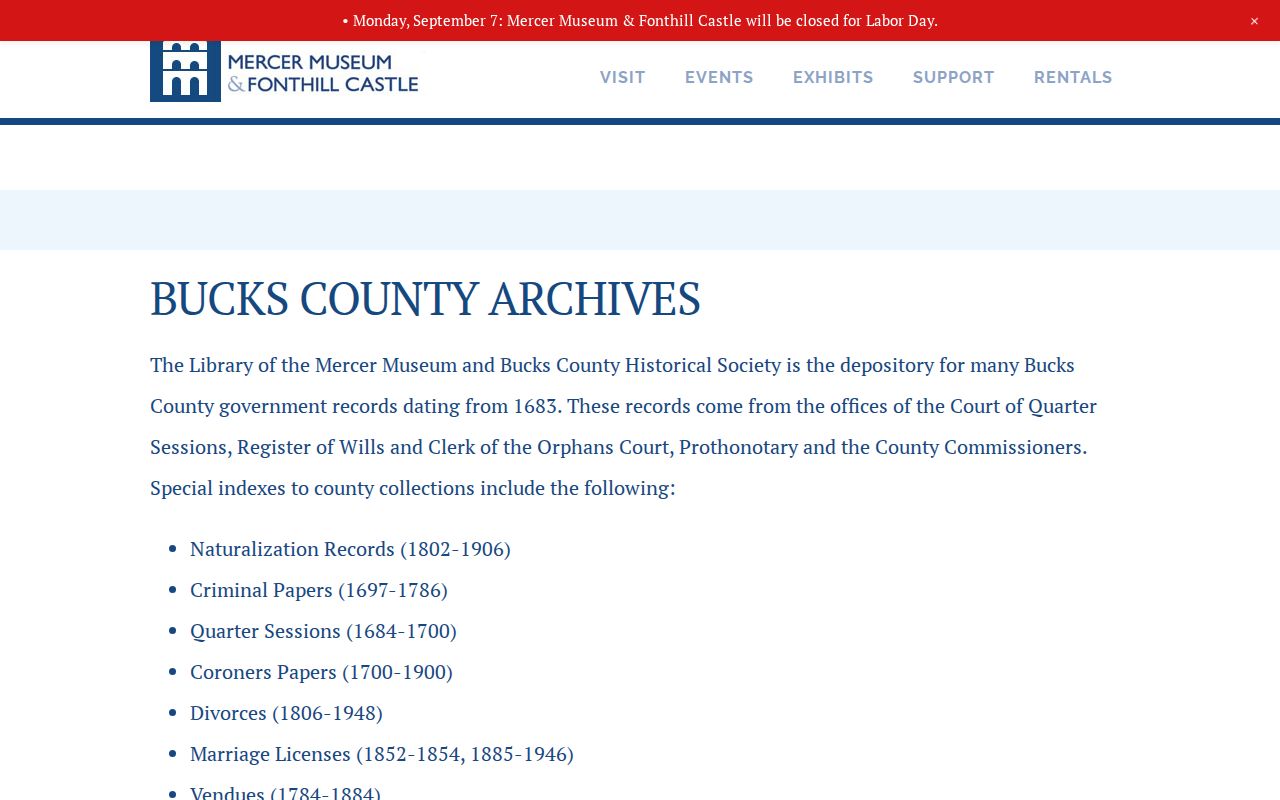
Use the historical index to locate an instrument or record reference, then retain the archive’s citation, date, and access limits with the finding.
For documents from 1684 to the present, the Bucks County property-records guidance explains that LANDEX is fee-based and that the public research room offers historical books and a short staff orientation. Staff do not perform the historical or title search for a visitor, so a prepared list of references helps.
Warrington Township Previous Resident Tax-List Leads
The State Archives Bucks County guide provides a highly specific historical lead for a Warrington Township address or family line: tax-list microfilm roll 9796 for 1783-1807, roll 9797 for 1808-undated, roll 12364 for 1846-1852, and roll 12365 for 1852-1858. These runs can place a named taxpayer or property holder in the Township within a defined period. They should be read as the actual microfilm displays them, including the list heading, date, spelling, district notation, and image or page.
A screenshot of the Pennsylvania State Archives land-records overview shows the wider land-record framework that precedes or supports later county deed research.
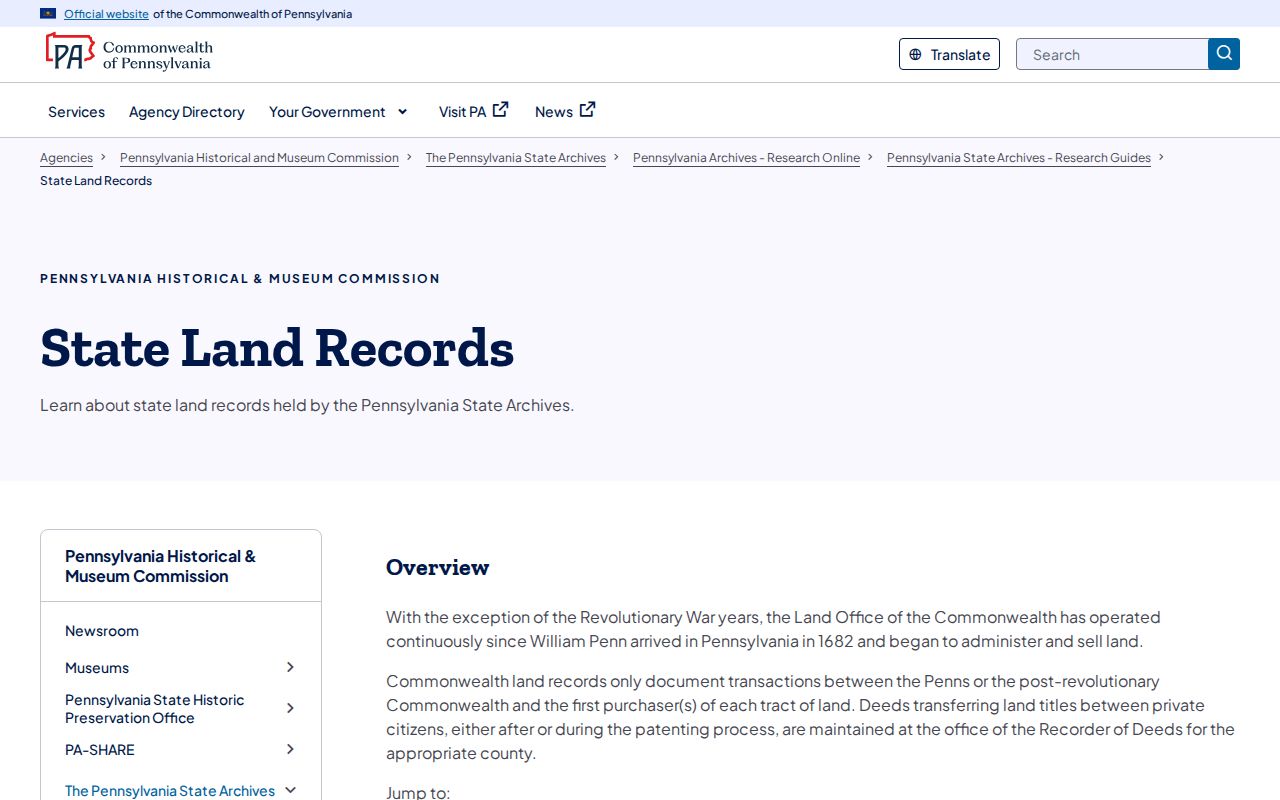
For the earliest title questions, warrants, surveys, and patents provide a separate Commonwealth land-record framework; they do not replace the County transfer chain.
Warrington Township Previous Resident Number Gaps
A modern street number may never appear in an older Warrington deed. The property card’s situs address, tax mailing address, and legal description are separate elements. An older instrument may identify a lot, tract, development, bearing, boundary, or adjoining land instead. When an address search fails, use the parcel number, deed book/page, subdivision-plan reference, municipality, and legal description to bridge the gap. Do not invent a Township-wide renumbering or assume that the current number existed in an earlier period.
This is the key comparison between current tax records and historical papers: the current card makes a parcel easy to find, while the legal description carries the land identity backward. A plan reference can be especially useful where later development created an address from an earlier tract. The search becomes more reliable when every form of the location is copied exactly before any name is compared.
Note: An old deed proves a recorded land transaction; it does not prove the age of a building or the identity of every person who lived there.
Warrington Township Previous Resident Village Labels
Historic Warrington records may be filed under village and road terms that differ from the current Township mailing label. The official comprehensive plan identifies Warrington, Neshaminy, Pleasantville/Eureka, and Tradesville as historic crossroads villages. It also links older movement and settlement patterns to Easton, Bristol, and Street roads. Try the place wording used by the source, then compare the legal description with current County parcel geography before deciding that two names represent the same place.
Warrington’s establishment in 1734 and the survey-line basis for later roads explain why older land descriptions can be more precise than a modern number. The Township comprehensive plan is a local context source for these historic labels. It does not prove that any named person occupied a particular parcel.
Warrington Township Past Resident Household Evidence
Ownership records are only one layer of a prior-address question. A confirmed historical directory or census result can add household context, but only after its own title, year, page, and scope are verified. Bucks County Free Library identifies Ancestry Library Edition and HeritageQuest as historical research platforms, including city-directory and census material. The official pages do not publish a Warrington directory shelf run, criss-cross sequence, or sample entry. Treat a possible volume as a lead until the original item is cited.
- Set the address or legal-description period from a confirmed deed transfer or tax-list appearance.
- Search a library platform or onsite collection for a relevant census or possible directory volume that matches the place and period.
- Record the original item’s title, year, page or image, printed name, and any stated address or village label.
- Compare the dated household lead with the deed chain, tax list, marriage, probate, naturalization, or obituary record group that fits the same period.
The separate Warrington Township city directory collections page details the verified archive and library routes for confirming a volume. It does not substitute an unverified directory format for local evidence.
Lawful use. Research on past residents is best limited to family history, estate questions, property history, and personal curiosity. Do not use a historical address trail to stalk, harass, or harm a living person.
Warrington Township Previous Resident Township Files
When the deed chain reaches a known project period, Township records can add limited address-specific context. Warrington’s Open Records Officer accepts written Pennsylvania Right-to-Know requests in person, by mail, email, or fax for defined existing records such as building permits, maps and plans, agency decisions, meeting minutes, and letters. A request should name the address or parcel, record type, timeframe, and desired format. It is not a public database for identifying everyone connected to a property.
The Township says records may be viewed without charge during weekday office hours, copying charges may apply, and a response is due no later than five business days after receipt. The Warrington Township Right-to-Know page identifies the official request route. It also makes clear why an address- and date-specific request is more useful than a broad request for names.
A screenshot of the Bucks County genealogical and archival search-request page shows an additional County route for defined historical and archival inquiries.
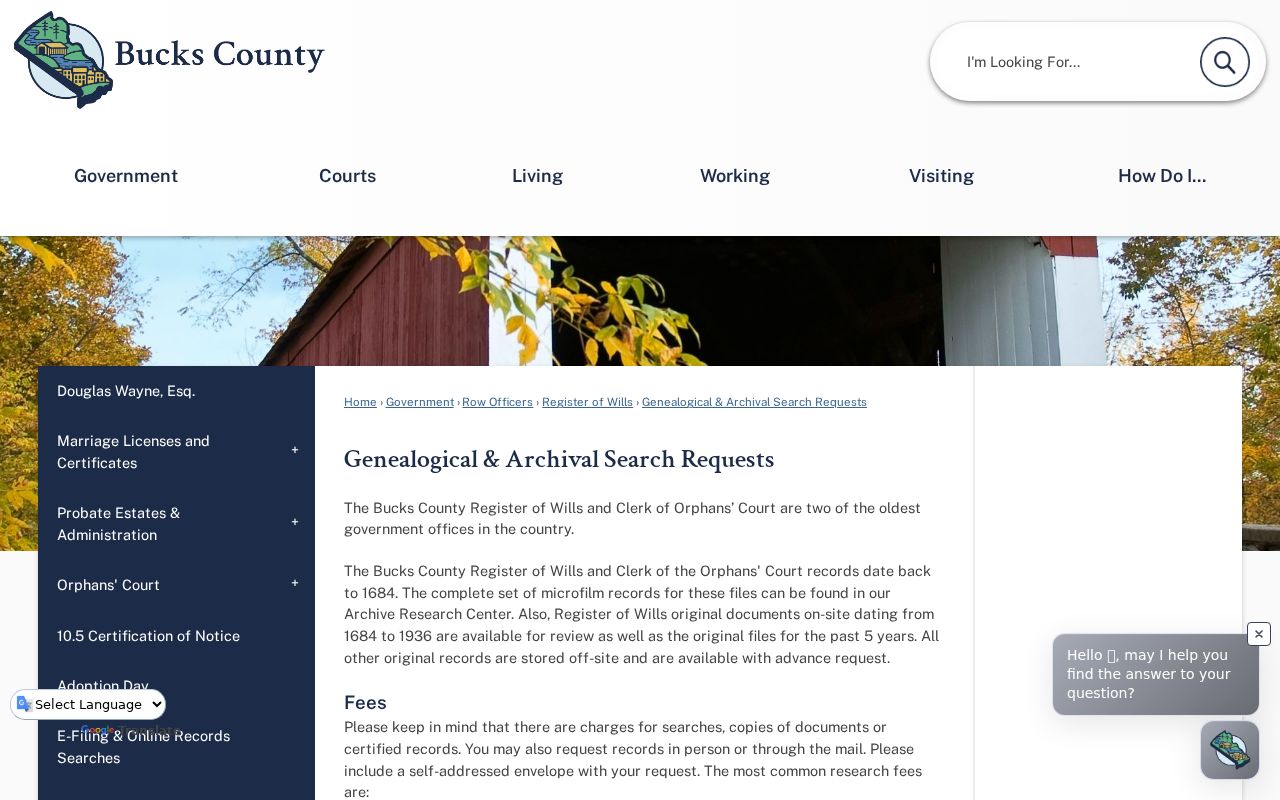
Use the correct custodian and a narrow record description so the response can be evaluated alongside the deed, tax, archive, or library evidence.